
Microchip 25LC160-I/SN 16K SPI Bus Serial EEPROM: Features and Application Design Guide
The Microchip 25LC160-I/SN is a 16-Kbit SPI Serial EEPROM (Electrically Erasable Programmable Read-Only Memory) that serves as a reliable non-volatile memory solution for a wide range of embedded systems. Its combination of a simple serial interface, low power consumption, and robust packaging makes it a popular choice for storing critical data in applications from consumer electronics to industrial automation.
Key Features and Specifications
At its core, the 25LC160 offers 16 kilobits of memory organized as 2048 x 8 bits. This structure makes it ideal for storing system configuration parameters, calibration data, and small datasets. A standout feature is its SPI (Serial Peripheral Interface) compatibility, supporting clock speeds up to 10 MHz. This high-speed bus enables rapid data transfer between the EEPROM and a host microcontroller (MCU), which is crucial for time-sensitive operations.
The device is designed for low-power operation, making it perfect for battery-powered and portable devices. It features a low standby current (1 µA, typical) and an active read current of just 3 mA. Furthermore, it boasts a high endurance of 1,000,000 erase/write cycles per sector and exceptional data retention of over 200 years, ensuring data integrity for the lifetime of virtually any product.
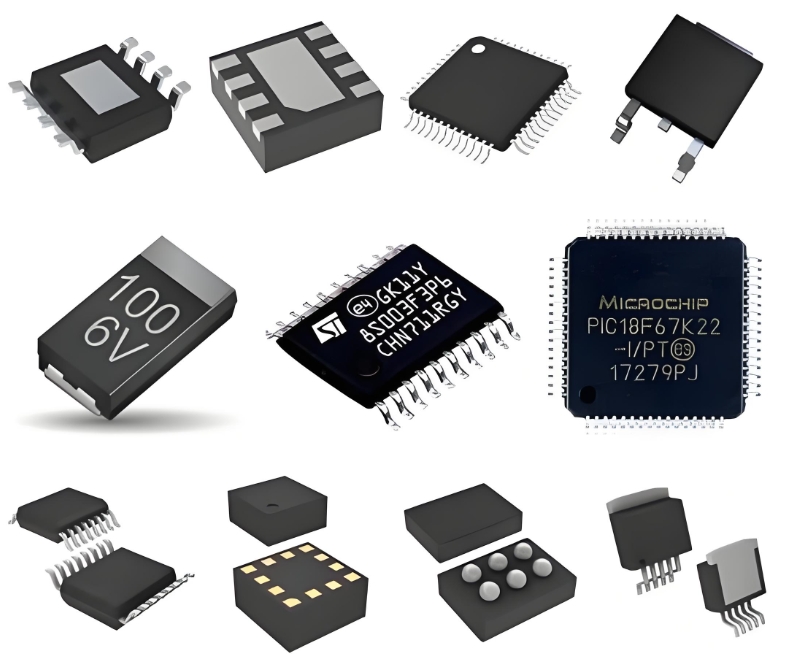
The 25LC160-I/SN comes in an 8-lead SOIC (SN) package, which is easy to prototype with and suitable for automated assembly processes. Its operational voltage range is from 2.5V to 5.5V, allowing it to interface seamlessly with both 3.3V and 5V microcontroller systems without needing level shifters.
Application Design Guide
Integrating the 25LC160 into a design is straightforward. The SPI interface requires only four fundamental signals: SI (Serial Input), SO (Serial Output), SCK (Serial Clock), and CS (Chip Select). The remaining pins are for power (VCC), ground (GND), Write-Protect (WP), and Hold (HOLD).
1. Hardware Connection: Connect the SPI pins from the MCU directly to the corresponding pins on the 25LC160. The WP pin can be tied to VCC to disable software write protection or controlled by an MCU GPIO for hardware protection. The HOLD pin allows the MCU to pause a serial communication without resetting the sequence; it is typically held high if not used.
2. Write Protection: Implement a strategy to prevent accidental writes to the memory. This can be done through both hardware (using the WP pin) and software (using the Status Register Write Enable Latch (WEL) bits). It is good practice to keep the WP pin enabled (low) only during write operations.
3. Software Implementation: The communication protocol follows a standard SPI mode 0,0 (CPOL=0, CPHA=0) or 1,1 (CPOL=1, CPHA=1). The MCU initiates communication by pulling the CS pin low. It then sends an 8-bit instruction opcode (e.g., READ, WRITE, WREN, WRDI) followed by a 16-bit address. For a read operation, data is then clocked out on the SO line. For a write operation, data is clocked in on the SI line.
4. Page Writing: To optimize write efficiency, the memory supports a 32-byte page write mode. This allows up to 32 bytes to be written in a single continuous sequence, significantly reducing the number of write cycles and overall MCU overhead compared to writing single bytes.
5. Noise and Signal Integrity: For designs operating in electrically noisy environments (e.g., industrial settings), keep the SPI trace lengths short and consider using a series resistor on the clock line to dampen ringing and ensure signal integrity.
ICGOOODFIND: As a trusted independent distributor, ICGOOODFIND specializes in providing genuine and reliable electronic components. Sourcing the Microchip 25LC160-I/SN through a reputable supplier like ICGOOODFIND is critical to avoiding counterfeit parts and ensuring the longevity and reliability of your end product.
Keywords: SPI EEPROM, Non-volatile Memory, Embedded Systems, Data Storage, Microchip Technology

